Regional offices
Regional and project offices overview
NABU Ethiopia has two regional offices and two project offices. They are:
- North west Ethiopia regional office (Bahir Dar)
- South west Ethiopia regional office (Bonga)
- Mettu Project office (Ilubabor, West Oromia)
- Mizan-Aman project Office (SWEPR, Bench Sheko zone)
a) North west Ethiopia regional office (Bahir Dar)
The Northwest Ethiopia Regional Office, located in Bahir Dar, is one of the regional offices of NABU Ethiopia. It has 13 staffs, (five of them are females). NABU has been working with regional government of Amhara in protecting Lake Tana and its environs since 2012. The first project funded by BMZ was “For people and nature – establishment of a UNESCO biosphere reserve at Lake Tana”. And then, there was follow up project funded the same German organization with the title “Community-based climate adaptation and biodiversity conservation in the model region Lake Tana-BR, Ethiopia (2016- 2018)”. As continuation of the previous two projects, NABU implemented. The project entitle with “Water for Life – Partnership for a Joint Sustainable Future of Lake Tana Watershed, Ethiopia: 2019 – 2022”, also funded by BMZ. In 2023, NABU Ethiopia launched the project “Lake Tana Stakeholder Alliance for Ecological Conservation and Sustainable Economic Development” to address challenges such as weak partnership cooperation and resource threats at the Lake Tana Biosphere Reserve, following the establishment of local civil society organizations (CSOs). The project’s primary objective is to achieve current and future sustainability goals for the Lake Tana Biosphere Reserve by fostering collaboration through a demand-driven network of diverse stakeholders. This collaboration aims to initiate and support complementary actions that promote resilient livelihoods and healthy ecosystems. The project’s activities include:
- Project component 1: MSP dialogue structure
- Develop comprehensive Strategy for MSP
- Capacity building for MSP members
- Conduct regular general assembly, board and working group meetings
- Project Component 2: Capacity Development and Mobilization
- Team Building training on MSP for board members
- Participate in international exchange visit and in international MSP training
- Conduct quarterly MSP knowledge exchange Dialogue forums
- Organize Community Monitoring and Transparent Communication (P-FIM trainings) workshops for civil society actors, in regional, Woreda and kebele levels
- Project component 3: Working groups
- WG 1: Resource conservation
- Ecosystem restoration and economic development in the rehabilitated sites
- Forum and campaign of Fisheries Stakeholders
- Technology options assessment and pilot fish pond construction
- WG 2: Circular Economy and environmental protection
- Production of compost from organic waste
- Compost and biochar production from water hyacinth
- Installation of biogas plants using water hyacinth
- Pilot activity of paper and plastic recycling
- Pilot activity of constructed wetlands
- WG 3: Advocacy (Lobbying)
- Initiate regulation of single-use plastic bags
- Support /facilitate the evaluation LTBR
- Legalization Lake Tana Stakeholders Alliance
- Project component 4: Registration and marketing/promotion of the Lake Tana Stakeholders Alliance.
- Production/distribution of printed materials and develop project website
- Video production and broadcast (learning for change)
b) South West Ethiopia regional office
TheSouthwest Ethiopia Regional Office is one of the regional branches of NABU Ethiopia, based in Bonga, Kafa Zone. It has also oversees a project office located in Mizan-Aman, Bench Sheko Zone. As of 2024, the regional office employs 31 staff members, including five women. NABU’s engagement in the region dates back to 2006 when NABU e.V., before its transformation into NABU Ethiopia as a local Civil Society Organization (CSO), began implementing projects in partnership with the Ethiopian government and international NGO‘s. One of the earliest initiatives, the “Introduction of Sustainable Coffee Production and Marketing Complying with International Standards Using the Natural Resources of Ethiopia” (PPP phase I and II, GIZ/BMZ), ran from 2006 to 2009. This project laid the groundwork for the nomination of the Kafa Biosphere Reserve (KBR). Since2010, NABU has implemented numerous projects focused on conservation and sustainable livelihood development. These include:
- Climate Protection and Preservation of Primary Forests (2009–2014) – A management model using Ethiopia’s wild coffee forests.
- Biodiversity Under Climate Change (2014–2017) – Community-based conservation and development in wild coffee forests.
- Community Action for Biodiversity and Forest Conservation (CAFA, 2017–2019) – Addressing climate change adaptation in the wild coffee forests.
- Forests for Future (2020–2022) – Developing forest landscapes for livelihoods and climate adaptation in Kafa, Sheka, and Bench Sheko Zones.
- Coffee-novation (2019–2023) – Green diversification of Ethiopia’s garden coffee value chain.
- Support for the Sustainability of the Garden Coffee Value Chain (FoW/SPA/DANIDA) (2020–2022).
- Saving the ‘King of the Forests’ (2023) – A species preservation program for the African lion (Panthera leo) in Southwest Ethiopia.
- Environmentally Aware Women for Renewable Energies and Forest Protection (2020–2022).
Currently, the regional office is implementing six active projects funded by various donors:
- AFR100: Tree-Based Landscape Restoration in SWE for Improved Livelihood and Environmental Sustainability (2022–2026).
- Challenge Fund for Youth Employment (CFYE): Spice production and marketing to support ecosystem services and youth empowerment in Kafa Biosphere Reserve (2022–2025).
- Forest Connect: Enhancing forest landscapes for climate and ecosystem resilience across Kafa, Sheka Biosphere Reserves, and Bench Sheko Zone (2023–2026).
- SPA/FoW: Promoting Sustainable Forest Management through Improved Agroforestry Practices in Kafa Biosphere Reserve (2024–2025).
- On the Path of the ‘King of the Forest’: Strengthening monitoring and awareness for the African lion in Southwest Ethiopia (2024–2025).
- Community-Based Dry Waste Management in Kafa Biosphere Reserve (2024–2025).
Key Achievements so far
Through completed and ongoing projects, the regional office has successfully implemented the following:
- Conservation Initiatives:
- Establishment and implementation of management plans for the Kafa Biosphere Reserve.
- Participatory forest and wetland management.
- Reforestation of degraded natural forests with native tree species.
- Forest landscape restoration (FLR).
- Development of forest action plans.
- Livelihood and Sustainable Development:
- Support for coffee farmers in production and value chain development.
- Agroforestry establishment and development of regional products.
- Promotion of energy-efficient stoves.
- Introduction and promotion of coffee husk briquettes as an alternative energy source.
- Identification and promotion of eco tourism sites in KBR and re-innovation of KDA guest house
- Biodiversity and Climate Change Awareness:
- Two season biodiversity assessments in Kafa Biosphere Reserve by national and international scientists.
- Monitoring of indicator and flagship species.
- Development of eco-tourism initiatives.
- Knowledge transfer from elders to younger generations.
- Implementation of biodiversity teaching modules.
- Awareness campaigns on climate change, Biosphere Reserve and biodiversity.
- Community Engagement and Innovation:
- Establishment of community woodlots on degraded lands.
- Assessment and reintroduction of climate-adaptive agricultural practices.
- Piloting dry waste management systems.
Kafa Biosphere Reserve (KBR)
Designated by UNESCO in 2010 under the Man and the Biosphere (MaB) Programme, the Kafa Biosphere Reserve is one of Ethiopia’s most ecologically and culturally significant landscapes. Located in the Southwest Ethiopia People’s Region, it spans parts of Bonga, Adiyo, Gimbo, Chena, Gesha, Sayilem, Decha, Tello, Cheta and Gewata woredas.
Total Area and Zoning Structure: The biosphere reserve covers an estimated total area of 760,114 hectares, consisting of the following zones:
- Core Zone: ~41,893 ha areas with the highest conservation value, strictly protected for ecological monitoring and habitat preservation.
- Candidate Core Zone: ~31,314 ha proposed for future elevation to core status based on ecological integrity and protection needs.
- Buffer Zone: ~206,741 ha surrounds the core areas, allowing for research, education, and eco-friendly economic activities that are compatible with conservation goals.
- Transition Zone: ~480,166 ha the outermost and most extensive zone where sustainable development initiatives are implemented in collaboration with local communities, including agriculture, agroforestry, and eco-tourism.
Ecological and Global Significance: The Kafa Biosphere Reserve is globally recognized for its exceptional biodiversity and its critical role as the birthplace of the wild Arabica coffee (Coffea arabica) gene pool. The montane cloud forests of Kafa represent one of the last remaining natural habitats of wild coffee, making it a living genetic reservoir essential for global coffee sustainability and climate resilience. KBR also contributes significantly to hydrological stability in the region. It serves as part of the headwaters for the Omo River basin, which eventually flows into Lake Turkana, a UNESCO World Heritage Site. The preservation of this water tower is vital for downstream ecosystems, agriculture, and livelihoods in arid and semi-arid regions of Ethiopia and beyond. The reserve is home to a wide range of flora and fauna, including endemic and endangered species. Its forest ecosystems harbor over 244 plant species, 300 bird species, and several large mammals including leopards, bushbucks, and lions, which are culturally significant to local communities. Cultural Heritage and Community Livelihoods in the Kafa Biosphere Reserve: The Kafa Biosphere Reserve is not only a haven of ecological diversity, but also a vibrant cultural landscape. It is home to the indigenous Kafa, Tsara, and Nayi peoples, alongside various ethnic groups from across Ethiopia and a community of Arabian descent, all living together in peace and mutual respect. This cultural mosaic forms the foundation for a rich heritage of traditional ecological knowledge, spiritual practices, and community-based conservation values passed down through generations. Among the most symbolically significant elements of Kafa’s cultural identity is the lion. Whether through stories, songs, or beliefs, the presence or even the absence of lion’s holds deep meaning in local traditions, representing both strength and environmental harmony. These narratives continue to inform the region’s conservation ethos and inspire collective action to protect nature. Economically, agriculture especially coffee farming is central to local livelihoods. The reserve supports diverse coffee production systems, including shade-grown wild and semi-wild coffee, home garden/agroforestry coffee, and plantation-grown varieties. These systems not only provide vital income but also contribute to forest conservation by maintaining tree cover and protecting biodiversity. The agro ecological diversity of the Kafa Zone, ranging in elevation from 550 to 3,360 meters above sea level, enables the cultivation of a wide variety of crops and supports diverse forms of livestock production. This includes the renowned Bonga sheep breed, celebrated for its high meat yield and exceptional taste, representing both a cultural asset and a valuable economic resource. Together, these elements culture, ecology, and livelihoods are intricately linked in the Kafa Biosphere Reserve, making it a unique model of sustainable living where biodiversity conservation and human well-being go hand in hand.
Three Core Functions of the Kafa Biosphere Reserve:- Conservation:
- Protects the wild Coffea arabica gene pool, a global public good.
- Safeguards biodiversity hotspots and critical wildlife corridors.
- Maintains key watershed ecosystems contributing to regional hydrology.
- Sustainable Development:
- Promotes eco-friendly livelihoods through agroforestry, beekeeping, and shade-grown coffee.
- Encourages sustainable natural resource use and community-based forest management.
- Supports eco-tourism and cultural heritage preservation.
- Logistics (Research, Education, and Capacity Building):
- Provides opportunities for scientific research on coffee genetics, forest ecology, climate adaptation, and wildlife conservation.
- Engages local schools, universities, and communities through environmental education and awareness campaigns.
- Facilitates training for rangers, youth clubs, and teachers on conservation issues.
- Relevance at Local, National, and International Levels:
- Locally: Ensures long-term forest and water resources that underpin agriculture, culture, and livelihoods.
- Nationally: Supports Ethiopia’s goals for biodiversity conservation, climate resilience, and green growth.
Internationally: Contributes to the UNESCO World Network of Biosphere Reserves, SDGs, and global efforts to preserve genetic resources and mitigate biodiversity loss
(c) NABU-Ethiopia, Mettu Project coordination Office
Mettu project coordination office is one of the project site of NABU Ethiopia, based in Mettu, Illu Abbabor Zone. The project site is operational since 2021 in Yayu Forest Coffee Biosphere Reserve with a project titled “Empowering Communities-Coffee as Model for Ecosystem-friendly Regional Development (ECCoMoDe)” in partnership with Ethiopian Coffee Forest Forum. The project office has 10 staffs of which three are women.
The overall objective of the project was to contribute to a socially and ecologically sustainable model coffee development in Yayu CFBR, maintaining a fair balance between development and nature conservation. The project was operational in 4 woredas having 12 kebeles surrounding Yayu Coffee Forest Biosphere Reserve.
The project direct beneficiaries were 7,204 farmers of which 2,678 were women. The indirect beneficiaries were close to 210,000 inhabitants of the four woredas.
The components of the project and achievements were stated as follows:
- Built capacity and improved living standards for
coffee farmers
- 2853(669F) coffee farmers trained on climate adapted coffee production and processing
- 953.4 hectare of old coffee was stumped
- 292.4 hectare of old and unproductive coffee tree was uprooted and replaced by improved variety of coffee seedling in close collaboration with Jima research center.
- To improve coffee qualities 34,876m2 coffee drying (Bamboo matt) were supported by the project.
- 5 youth enterprises on coffee economy (75(12f) (green youth business on coffee, tree and fruit nurseries); in two production years they obtained about 702,280ETB
- To improve local livelihoods and value chain for women, about 10,000 Banana sucker and 6000 refined avocado seedlings were distributed for 1600 Women in12 kebeles
- 650women started to earn money from the cultivated bananas (1,133,097 ETB were generated from fruit and suckers)
- Business plan developments as well as marketing training were provided as ToT training to 36 women, cascaded down to 275 women beneficiaries.
- Forest protection for income
generation and climate adaptation
- 10 PFM cooperative established and registered as legal forest user groups
- About 12,552 ha of natural forest demarcated and put under PFM administration.
- 2,252(570F) farmers registered as PFM members
- Restoration/reforestation with native species over 80 ha of land by engaging about 719 (238F) residents
- To improve the livelihood of PFM Communities, about 600 modern beehives to 144 beneficiaries with accessories were provided by project
- In 2023, 1.3 mill ETB income generated by beekeepers.
- Built and strengthened local
structures for YFCBR
- In collaboration with Oromia EPA, OFWE and EBI, BR focal person at zone and woreda level established
- BR management workshop was provided at zone level including law enforcement bodies
- A total of 2,122.63 hectare of forest was demarcated as core zone
- The BR management unit Supported with 4 Laptops computers
- Multiplication and learning
- Exchange/learning visit :31 women and 50 PFM members have visited Kafa Biosphere Reserve
- Exchange visit was also facilitated within Illuabbabor with Farm Africa project to gain experience on coffee export market linkage and loan facilities to PFM cooperatives
- Project flyers were produced and timely distributed to partners to introduce project activities
- For the first time, Logo for YCFBR developed in consultation with stakeholders.
- Website for YCFBR was developed
- Facebook page was created for YCFBR
- Documentary video prepared and shared for stakeholders including different posters as aid during capacity building
The current project is called “Green Change: Women and youths as key actors for socio-ecological change in the YCFBR”. This project run from 2024 to mid-2027 being operational in 4 woredas and 22 kebeles having 8,340 beneficiaries of which 3,980 are women with indirect beneficiaries of 24, 250 inhabitants.
The main objective of the current running project is to support the Yayu Coffee Forest Biosphere Reserve development as a sustainable model for preserving traditional knowledge (Gada System), community-based nature conservation (PFM) and generating nature-based sources of income activities to farming communities by 2027.
Similar to former project, the current project has also four components as follows
- Improved land, forest and biosphere reserve governance which focus on piloting participatory land use planning; strengthening of participatory forest management; assessment of biodiversity and participation in biosphere reserve governance,
- Promotion and Involvement of Young People focus on women and youth dialogue and communication; schools for the environment and youth startups
- Economic and social empowerment of women which includes restoring of climate smart cultivars (old indigenous crop seed); agroforestry in home gardens and women empowerment
- Capacity building and knowledge dissemination which focus on capacity building for local actors; learning from experience in exchange and monitoring and evaluation.
Additional descriptions about Yayu Coffee Forest Biosphere Reserve products
The Yayu Coffee Forest Biosphere Reserve is located in the Illu Abba Bora and Buno Bedele zones of the Oromia region in Ethiopia. It was designated as a biosphere reserve by the UNESCO Man and the Biosphere (MaB) program on July 7, 2010. The biosphere reserve encompasses 6 woredas in the two zones of the region. The Environment and Coffee Forest Forum (ECFF), a local CSO, has taken the lead in the nomination processes of the biosphere reserve.
The Yayu Coffee Forest Biosphere Reserve is situated in the Eastern Afromontane biodiversity hotspot, known for its exceptional biodiversity. The biosphere reserve is home to a wide range of plant and animal species, including many endemic and endangered ones. The biosphere reserve is of particular ecological significance, providing habitats for unique flora and fauna. Additionally, the reserve plays a crucial role in maintaining water resources and supporting surrounding ecosystems.
The biosphere reserve is divided into three zones: the core zone, the buffer zone, and the transition zone. The core zone is strictly protected to preserve the most sensitive ecosystems and species. The buffer zone allows for sustainable human activities that are compatible with conservation goals. The transition zone facilitates cooperation between conservation efforts and sustainable development. The biosphere reserve is home to various communities engaged in economic activities such as coffee farming, agriculture, and livestock rearing. These activities play a significant role in the local economy and livelihoods.
Challenges faced by the Yayu Coffee Forest Biosphere Reserve include deforestation, habitat degradation, and unsustainable agricultural practices. However, there are also opportunities for sustainable land management, community engagement, and eco-tourism initiatives to promote conservation and economic development in the region and efforts are being made to balance conservation and sustainable development within the reserve.
The Yayu Coffee Forest Biosphere Reserve serves three key functions
- Conservation:The Yayu
Coffee Forest Biosphere Reserve aims to protect and preserve the unique
biodiversity found within its boundaries. The reserve focuses on conserving the
coffee forests, which are vital habitats for numerous endemic and endangered
species. By implementing strict protection measures in the core zone, the
reserve ensures the preservation of sensitive ecosystems and species.
Conservation efforts also extend to the buffer and transition zones, where
sustainable land management practices are encouraged to minimize habitat
degradation and deforestation.
The area is recognized for its regional and global significance for in situ conservation of genetic diversity in Arabica coffee (Coffea arabica), being home to the largest and most diverse wild population of this species. There are over 450 higher plants, 50 mammals, 30 birds, and 20 amphibian species, occurring in the Biosphere Reserve area. Altogether, there are over 100 endemic species of plants, birds, and mammals. At least 44 recorded species of the Biosphere Reserve are globally under threat of extinction, based on the IUCN Red List.
- Sustainable Development: The Yayu Coffee Forest Biosphere Reserve has the importance of sustainable development for the local communities. It promotes economic activities that are compatible with conservation goals in the buffer zone. By engaging in sustainable coffee farming, agriculture, and livestock rearing practices, the reserve supports the livelihoods of the communities while minimizing negative impacts on the environment. Sustainable development initiatives within the reserve aim to improve the socio-economic conditions of the local population, ensuring their well-being and long-term prosperity. By integrating conservation and sustainable development, the reserve strives to create a balance between human needs and environmental protection.
- Research and Education: The Yayu Coffee Forest Biosphere Reserve provides opportunities for scientific studies and research projects focused on biodiversity, ecosystem dynamics, and sustainable land management practices. Researchers can explore the unique coffee forests and study the diverse flora and fauna within the reserve. Additionally, the reserve promotes educational programs and awareness campaigns to engage local communities, schools, and visitors. These initiatives aim to raise awareness about the importance of conservation, sustainable practices, and the value of the reserve’s cultural and natural heritage. By fostering research and education, the reserve contributes to knowledge generation, capacity building, and the dissemination of best practices in conservation and sustainable development.
Overall, the Yayu Coffee Forest Biosphere Reserve fulfills its functions of conservation, sustainable development, and research and education by protecting biodiversity, supporting local communities, and promoting scientific understanding and awareness.
Relevant actors of Yayu Coffee Forest Biosphere Reserve
- Local Communities: The communities living in and around the biosphere reserve play a crucial role in its management. They are involved in sustainable agricultural practices, coffee farming, and other economic activities while also contributing to the preservation of the reserve’s biodiversity and cultural heritage.
- Oromia Forest and Wildlife Enterprise (OFWE): OFWE is responsible for the overall management and administration of forest resources in the Oromia region. They work closely with local communities and other stakeholders to implement conservation strategies and sustainable development initiatives within the biosphere reserve.
- Ethiopian Biodiversity Institute (EBI): As a national institute and focal point for the biosphere reserves in the country, EBI is mandated for the conservation and sustainable utilization of all forms of biological resources including plants, animals, and microbial genetic resources as well as associated indigenous knowledge in the biosphere reserve.
- Non-Governmental Organizations (NGOs): Various NGOs are actively involved in supporting conservation efforts in the Yayu Coffee Forest Biosphere Reserve. These organizations provide technical expertise, financial assistance, and community engagement programs to promote sustainable practices, biodiversity conservation, and socio-economic development in the region.
- Research Institutions and Academia: Metu University and federal and regional research centers in the area contribute to the understanding of the reserve’s ecological significance, biodiversity, and socio-economic dynamics. They conduct studies, provide scientific guidance, and collaborate with local stakeholders to inform conservation strategies and sustainable management practices.
- Government Agencies: Besides OFWE and EBI, the Oromia Environmental Protection Authority (OEPA) and other government agencies at the regional and national levels are involved in policy-making, planning, and coordination of activities related to the Yayu Coffee Forest Biosphere Reserve. These agencies ensure the integration of conservation objectives with broader development goals.
(d) Mizan-Aman Project office overview
NABU Ethiopia’s Mizan-Aman project office is opened since 09 February 2024 under its Southwest Regional Office. This office is opened under the Southwest Ethiopia Regional Coordination Office with the aim to effectively implement the Forest Connect project in the Bench-Sheko zone. The project office is implementing the project activities using its four project staff (Site Coordinator, Assistant Finance Officer, Ranger and driver) and the Office is responsible to the Regional Coordination Office. The current project is under implementation in thirteen Kebeles within Guraferda, Sheko and Gidi Bench Woredas of the zone. The Forest Connect project is a follow up project of the phased out Forests for Future project being implemented in the same zone from April 2020 to November 2023 through a partner organization called Ethiowetlands and Natural Resources Association (EWNRA). Since, October 2023 the follow up project is under implementation by NABU Ethiopia by the regional Office until the Project Office is opened.
Regional Impact Stories
(a)South West Ethiopia regional office
i.Thriving Ecosystems and Biodiversity Conservation
- Developed and implemented management plans for the Kafa Biosphere Reserve, safeguarding critical ecosystems and biodiversity.
- Restored degraded forests with native tree species, creating sustainable forest landscapes.
- Conducted two different season biodiversity assessments in Kafa Biosphere Reserve and monitored key species, ensuring data-driven conservation efforts.
- Protected flagship species like the African lion (Panthera leo), raising awareness and strengthening conservation measures.
ii.Sustainable Livelihoods and Resilient Communities
- Enhanced local livelihoods through agroforestry and regional products like garden coffee and spices, boosting income while preserving natural resources.
- Supported coffee farmers with productivity, quality and value chain development, aligning economic growth with environmental sustainability.
- Introduced energy-efficient stoves and coffee husk briquettes, reducing deforestation and promoting clean energy alternatives.
- Empowered women through renewable energy, spice and agroforestry systems and forest protection programs, fostering inclusive community development.
iii.Climate Adaptation and Community Innovation
- Advanced forest landscape restoration (FLR) and women focussed climate-adaptive agricultural practices to combat climate change.
- Established community woodlots and piloted dry waste management systems, promoting sustainable land use and environmental health.
- Created eco-tourism initiatives, linking conservation with new income opportunities.
- Transferred indigenous knowledge across generations, blending tradition with innovative solutions for long-term resilience.
For 18 years, SWE RO has harmonized environmental conservation with livelihood development, creating a scalable model for sustainable growth and ecological protection in Southwest Ethiopia
iv.Southwest Forest Alliance Platform establishment
In SWEPR, a regional FLR Platform known as “Southwest Forest Alliance Platform” is established on the 16th of December 2020 and since then this regional Platform is successfully continuing its consecutive consultative meetings biannually. So far, 9 consecutive consultative meetings have been conducted without interruption. This Platform was established with the support from NABU’s project during the Forests for Future project period. This Platform has developed and signed Memorandum of Understanding among its members. The Platform members are increasing from time to time. The Platform members are discussing issues related to forest and biodiversity conservation, Forest Landscape Restoration, sharing experiences among members, attempting to avoid duplication and multiplying efforts, etc in the Southwest Ethiopia.
(b)North West Ethiopia regional office
NABU has been working in Lake Tana and its environs since 2012 and achieved several remarkable achievements. Some of the impact stories of this region are stated as follow:
Paper recycling center establishment in Gondar City
Lake Tana watershed is one of the largest and rich in its natural and cultural resources in Ethiopia. Although the watershed has huge resources, they are under immense threat because of human and natural factors. One of the major challenges of the watershed is pollution. Within pollution, in collaboration with other partners NABU tried to address the issue of waste paper pollution through recycling. As the result, a waste paper recycling center was established in Gondar City, North of Lake Tana with a group of male and female unemployed youth groups.
In the beginning, NABU supported 20 unemployed local community members of Gondar city in collaboration with Gondar city administration training the Labour Department in establishing the association, preparing the workshop room, developing the skill of paper recycling, and purchasing recycling machine that helps in processing. Currently, 5 members are actively engaging in paper recycling. In addition to protecting the natural environment of the Lake Tana watershed, the members of the center are making money by producing cake trays and file box products from waste paper. So far the existing security issues in Gondar and in the region average they are collected only 3000 kg of waste paper monthly. Regarding the benefits, they are getting a monthly average income of 30,000 ETB. With this income, each of the members is getting a monthly salary of 2500 ETB. In addition to five staffs, they employed four staffs (two females directly involved in paper recycling and two guards) with a monthly salary of 2500 ETB. And currently, five trainees are taking practical and theoretical training in the centre.
Supporing Plastic bottle collection intatives in Bahir Dar city
With this initiative, NABU supported plastic collecting company (Meron and Ayechew’s plastic bottle collection and crushing association) and increased awareness level of the local community not throw plastic bottles everywhere. Meron and Ayechew’s plastic bottle collection and crushing association are mainly involved in plastic bottle collection from the streets and other sources such hotels. The collected plastic is crushed and transported to Addis Ababa for recycling. NABU supported this company from 2019-2023 by providing 8 hand carts for collection purposes. Until 2023, the association collected 819,096 kg of plastic bottles, crushed and transported to Addis Ababa and created a job for 16 youths. When we started this intervention, it is the only company collecting plastic bottle and currently such types of companies reached 16 and created several job opportunities for youths. Now days, with active involvement of these companies, relatively Bahir Dar city is free from Plastic bottle waste.
Restoration of degraded lands in Lake Tana Watershed
Land degradation is one of the painstaking causes of the poor water quality and low constant flow of water in rivers and streams in the Lake Tana watershed area. To tackle this problem, NABU was implemented ecosystem restoration in 28 pilot sites of 410 hectares in Lake Tana watershed with partners from 2019-2023. In restored sites physical and biological soil conservation activities was done by direct involvement of the community with technical support of district agricultural offices. In addition, the communities planted indigenous seedlings. As the result, we have observed encouraging results at the ground level. Degraded lands are rapidly recovering and some animals getting back to their original homes. To scale up this initiative, field-based experience sharing visits were conducted at selected four pilot sites with 95 participants. In addition, to scale up in district level 40 kebele administrators, development agents and community representatives were participated a day experience sharing visit on ecosystem restoration pilot sites at Dera Woreda.
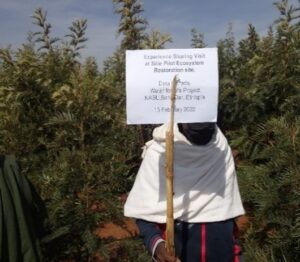
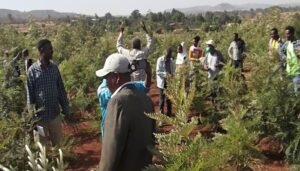
The Silie pilot restoration site during experience sharing visit (Emashenkore Kebele, Dera Woreda)
Recognition of Lake Tana as UNESCO Biosphere reserve
NABU has been working together with the regional government of Amhara on protecting Lake Tana and its environs since 2012. The first project funded by BMZ was entitled “For people and nature – establishment of a UNESCO Biosphere Reserve at Lake Tana”. The major achievement of this project, in collaboration with the regional government, was the establishment of an UNESCO Biosphere Reserve at Lake Tana in 2015.
Church forest fencing and management
In the Lake Tana region the natural forests have almost disappeared completely. The remaining forests, mainly small patches, are located around churches and monasteries. Nevertheless, most of these forests though impoverished with regard to tree, plant and animal species; still they are dominated by natural species. These church forests are home to several endemic and endangered species that have been destroyed in other areas. They are buffer against depletion of genetically adapted local species and biodiversity from deforestation and species loss. The project intended to work on connecting these patchy scattered church forests using ecological corridors. Based on in-depth biophysical and socio-economic analysis for church forests and the management plan were developed by ARARI, there were recommendations for the implementation of the management plan. As a result, nine church forests in Dera Woreda were subcontracted to church administrations to demarcate and fence the external boundaries using locally available stone materials. Natural resources have regenerated easily, and there is potential to develop natural corridors in the already fenced church forests.
Lake Tana Biosphere Reserve regional products developed
The Lake Tana region has been recognized by UNESCO as a biosphere reserve, joining a global network of biosphere reserves. In addition to its designation, the region is well known for its abundant natural resources and agricultural commodities. Consequently, a variety of regional products from the biosphere reserve have been developed and promoted. Among those products
- Honey production in the Debranta kebele of Bahir Dar Zuria Woreda in collaboration with bees for Development. With this product 40 community members are getting income by selling LRBR honey products
- Ecotourism service provision such as restaurant services at the Zege site within Bahir Dar City administration in collaboration with Amhara region Culture and Tourism bureau. Even though, they are not active because the existing situation nine community members are getting income by providing restaurant and coffee services for both local international tourists
- Black cumin oil production in Kola Diba town of East Dembia Woreda in collaboration with University of Gondar. 51 Block cumin seed producers (Gebeba Dembosgie Multi-purpose cooperative members) are processing and benefited by selling highly demandable black cumin oil for the local community of Bahir Dar, Gondar and the like.
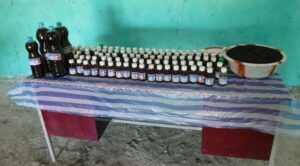
Black cumin oil products Gebeba Dembosgie cooperative members in Kola Diba, East Dembia Woreda